
Adding bias-tape trim
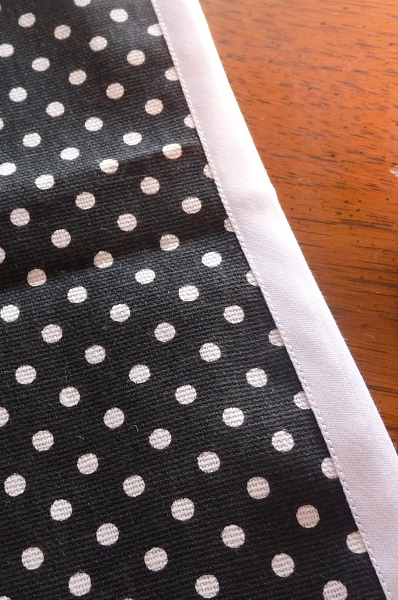 |
One way to finish edges and avoid bulk is to encase them in bias tape. But sewing this entirely by machine can be tricky if you want nice results. Why? Because although sewing the front on is easy, you then turn the rest to the back and stitch in the ditch on the front, hoping to grab the back in the stitching as you go. Usually, the parts you capture in back are uneven or you miss altogether, since you can’t see what you’re doing.
Often, I prefer to just stitch by hand in the back, but there are a few little tricks to help sew it by machine. It definitely works best without a lot of bulk. |
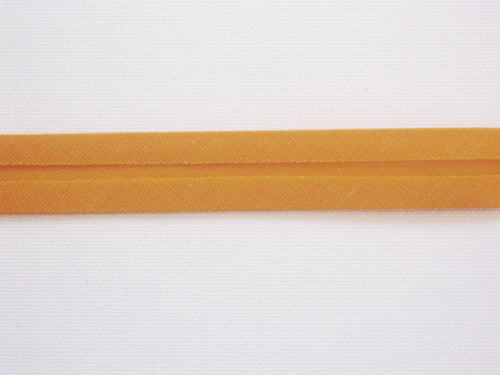
Supplies
(Click fabrics for direct links for purchase at Warehouse Fabrics Inc.)
|
|
 |
The process
 |
You may need to click these photos for bigger views.
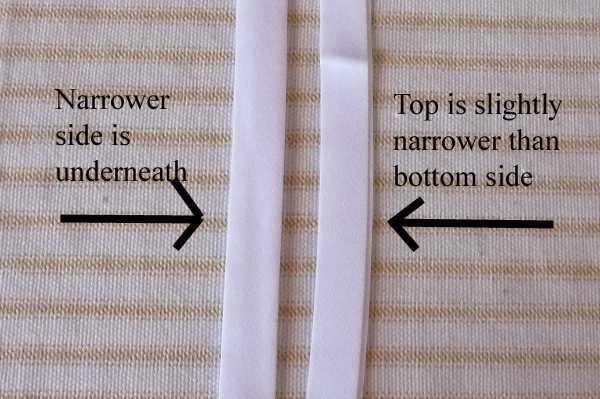
At left, I’m showing both sides of store-bought bias tape. This is extra-wide double fold. As you can see, one folded side of the tape is slightly narrower than the other. This is key. |
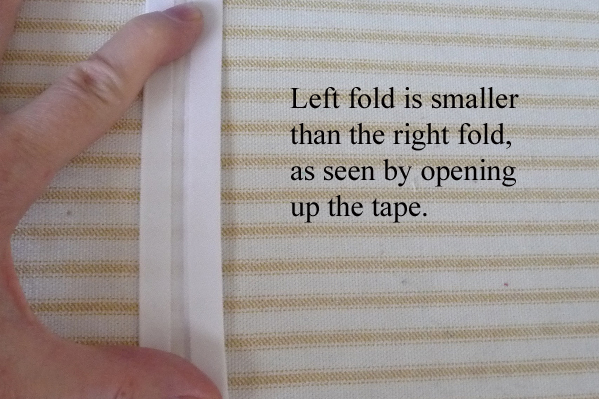 |
If you open it up, you’ll see the same thing. The fold along the left is narrower. The wider fold on the right is what makes that side slightly smaller when the tape is closed up. |
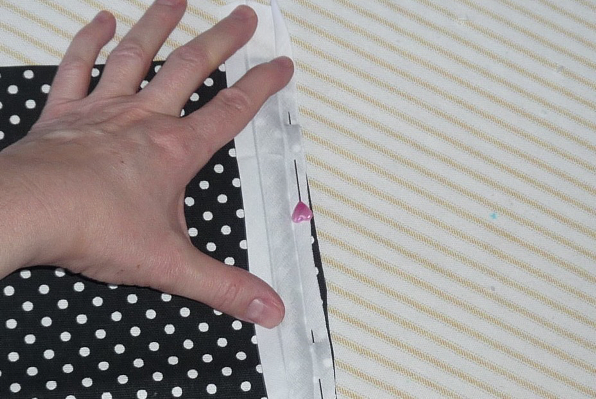 |
The edge of the tape that’s on the edge of the fabric here is the narrower side of the tape. That’s because we want the wider side on the back. So open it up and pin along the fabric. |
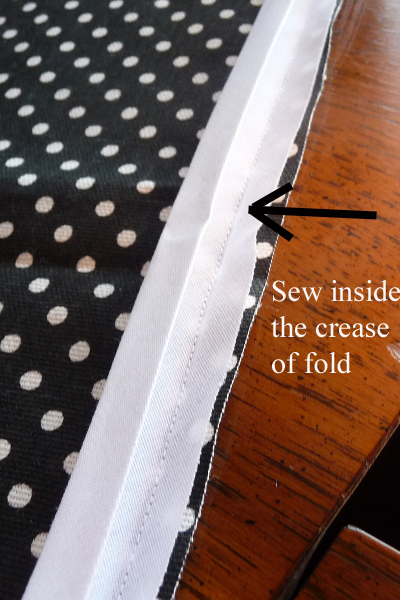 |
Stitch along the first fold crease. |
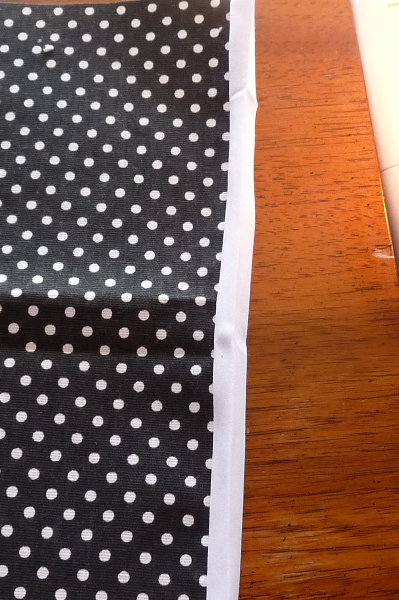 |
Fold it along that crease you just stitched into and flip the tape around so that your raw edge of the fabric is now encased. |
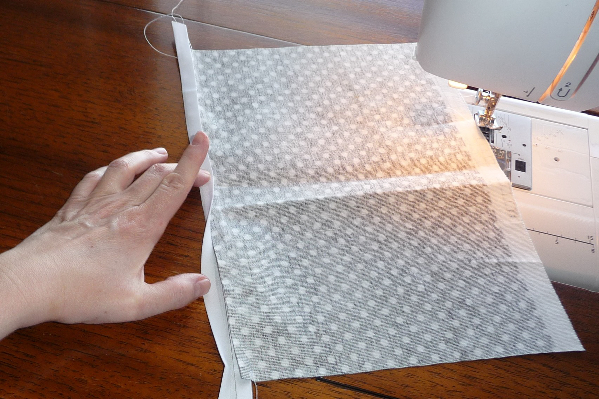 |
Here’s the view from the back. |
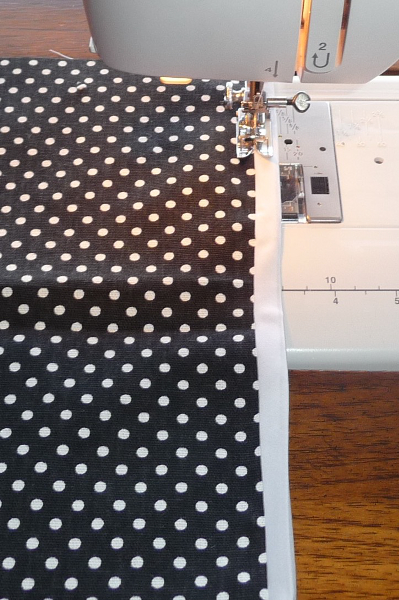 |
Turn it back to the front and stitch in the ditch or very close to the edge on the tape. I prefer to stitch slightly on the bias tape for better results.
Theoretically, you should be just catching the edge of the bias tape on the back. That’s because it’s just slightly wider on the back side. |
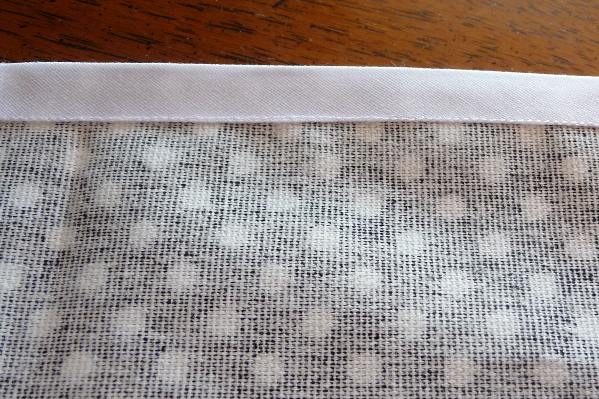 |
Here is the back side. Yeah, yeah, as usual, I should have used contrasting thread. Click the photo for a bigger view. |
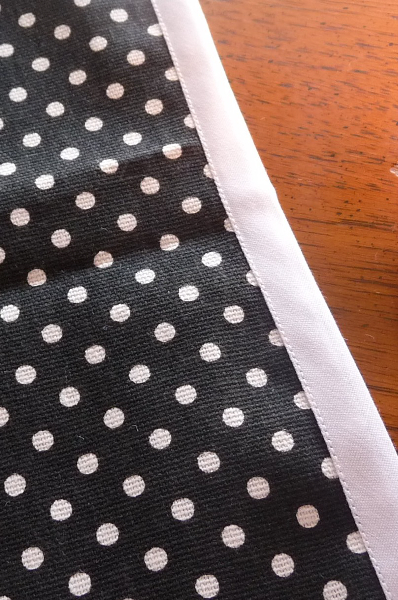 |
And if you look closely, you’ll see that I have stitched just slightly onto the bias tape. |


